

The Providence College Humanities Forum Spring 2026

Spring 2026 Humanities Forum Schedule
The Humanities Forum is an opportunity for members of the Providence College community to engage regularly in intellectual life outside of the classroom, deepen their appreciation for the humanities, and explore diverse perspectives from on and off campus. All are welcome.
If you do not have a Providence College email address, you may request to receive our regular email announcements by sending an email to pbelcher@providence.edu.
January 23, 2026
St. Thomas Aquinas Lecture

Whose Aquinas? The Thomism of Dante and of Étienne Gilson
George Corbett
Professor of Theology, University of St. Andrews
Friday, January 23 at 3:30 p.m. Ruane Center for the Humanities 105
The papal encyclical In Praeclara Summorum (1921) celebrates Dante as the ‘disciple of Saint Thomas Aquinas’, and his Commedia as containing a ‘treasure of Catholic teaching.’ By contrast, the French Thomist Étienne Gilson, in 1934, accused Dante of two crimes against Aquinas, and of striking a mortal blow to Thomism. Defending Dante against Gilson’s accusations, (and accusing Gilson, instead, of crimes against Thomism), this talk argues for a new Leonine renaissance of both Thomistic and Dante Studies.
Read more about this event.
George Corbett is Professor of Theology and Director of Research, School of Divinity, University of St Andrews. He has two principal areas of research and teaching: Theology and the Arts (with specialisms in Dante studies, sacred music, and theological aesthetics) and Systematic and Historical Theology (with specialisms in medieval theology, Aquinas’s theology, and Catholic theology).
January 30, 2026

Truth, Courage, and the Discipline of Perception Under Pressure
a conversation with Michael Sullivan
Attorney and Adjunct Faculty of Justice, Law, and Criminology at American University
Friday, January 30 at 3:30 p.m.
Ruane Center for the Humanities 105
How do people find their way through the disorientation of conflict, when fear, uncertainty, and pressure distort everyday judgment? Over decades of fieldwork in war‑torn regions, service with the Department of State, and documenting war crimes, Michael Sullivan (PC ’88) has reflected on how people make sense of extreme circumstances. Drawing on his experiences in Afghanistan, the Balkans, Iraq, and Ukraine, and engaging ideas from Viktor Frankl, Aleksandr Solzhenitsyn, and Admiral Stockdale—who turned to Epictetus during captivity in Hanoi—this conversation reflects on how people orient themselves as reference points fall away.
Read more about this event.
Michael Sullivan (PC ’88, recipient of the Personal Achievement Award from the Providence College National Alumni Association) is an attorney and international relations expert with extensive experience in Ukraine, Afghanistan, Iraq, Bosnia, Kosovo, Vietnam, and along the Thai-Myanmar border. He specializes in the study of war crimes documentation and historical atrocities. Sullivan’s fieldwork focuses on equipping state and non-state armed groups with a solid understanding of humanitarian law, along with effective methods and best practices for documenting war crimes. In academia, his research, which began during his residency in Ukraine, centers on the 1919 pogroms in Ukraine and Poland, as well as the subsequent pogroms in Rivne (Rovno) and Lutsk during and after the Nazi occupation of Poland.
Sullivan teaches at American University and is a member of the law faculty at the Afghanistan Law and Political Science Association, where he supports initiatives to expand educational access for Afghan women under Taliban rule. He has received the U.S. Department of State Superior and Meritorious Honor Awards and the NATO Non‑Article 5 Medal for service in Afghanistan.
February 6, 2026
In collaboration with the Mathematics & Computer Science Department
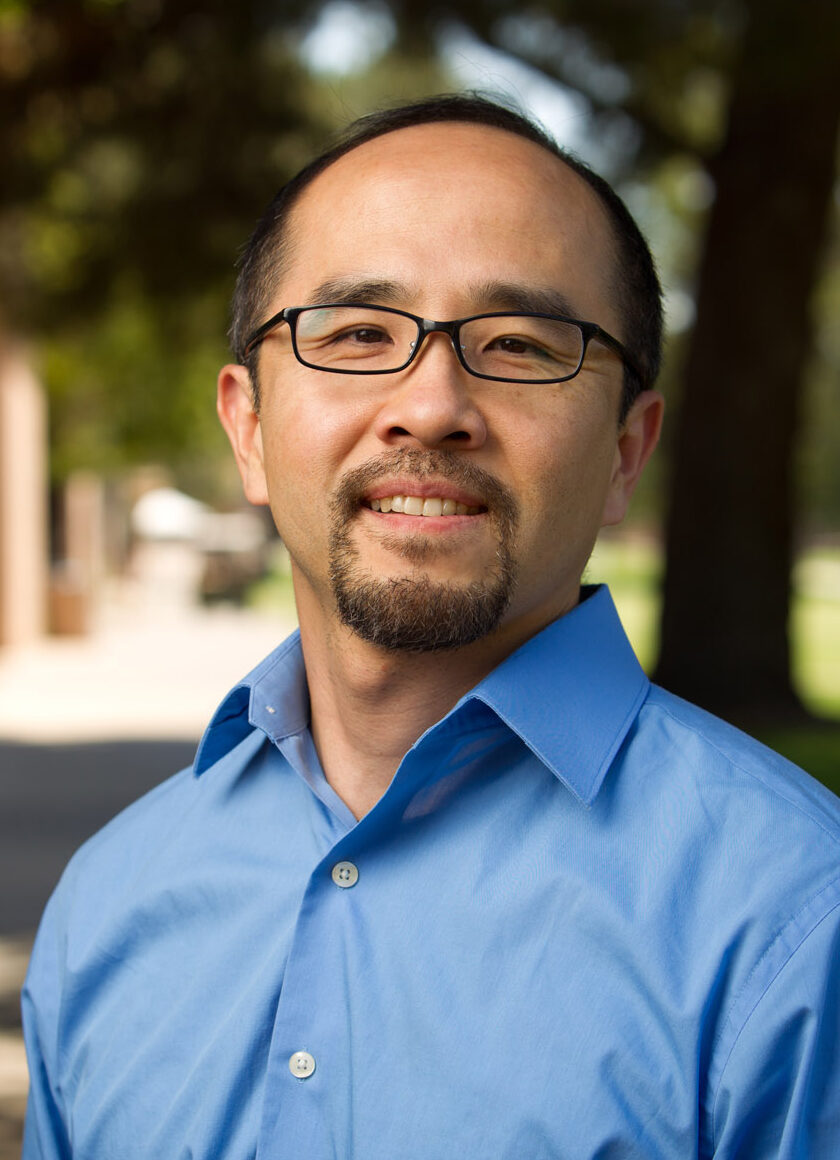
Mathematics for Human Flourishing
Francis Su
Professor of Mathematics, Harvey Mudd College
Friday, February 6 at 3:30 p.m.
Ruane Center for the Humanities 105
People often see mathematics as just a set of skills, like doing arithmetic or factoring a quadratic. But they don’t often think of math as relevant for experiencing joy and wonder. Yet math is a deeply human enterprise that can meet basic human longings, such as for beauty and exploration and truth, and can build virtues like persistence, creativity, an expectation of enchantment. In an AI era, skills are less important than the virtues built by a great education. In this talk, Dr. Su will also recount how an incarcerated man—now his friend—has helped him see this more clearly than ever before.
Read more about this event.
Francis Su is the Benediktsson-Karwa Professor of Mathematics at Harvey Mudd College, a former president of the Mathematical Association of America, and a Fellow of the American Mathematical Society. In 2013, he received the Haimo Award, a nationwide teaching prize for college math faculty. His work has been featured in Quanta Magazine, Wired, and the New York Times. His book Mathematics for Human Flourishing (2020), winner of the 2021 Euler Book Prize, offers an inclusive vision of what math is, who it’s for, and why anyone should learn it.
February 12, 2026
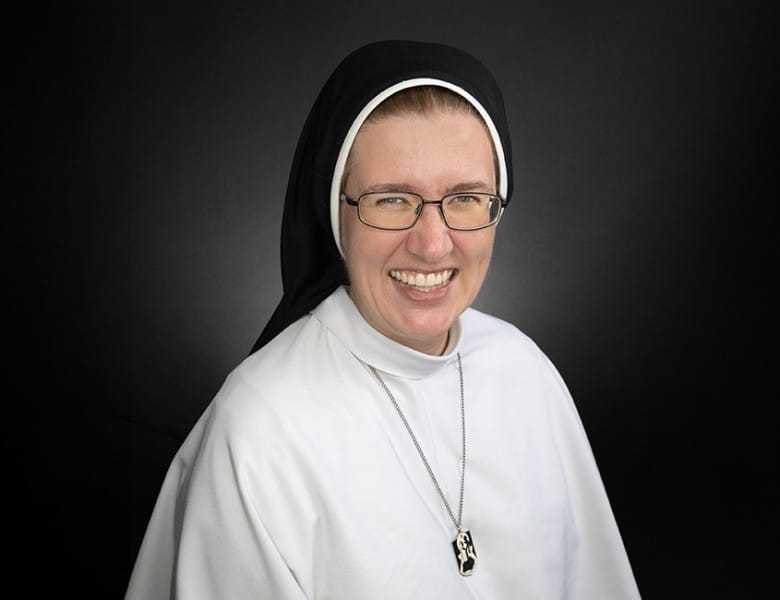
On Tolkien, Shakespeare, and the Nature of Christian Art
a conversation with Sr. Maria Frassati Jakupcak
Assistant Professor of English, University of St. Thomas, Houston
Thursday, February 12 at 4:30 p.m.
Ruane Center for the Humanities 105
What does Macbeth have to do with The Lord of the Rings? How does the contemporary obsession with “narrative” relate to the ancient art of story? What is “Christian art” anyway? We’ll take a stab at these questions and more in a far-reaching conversation on all things literary.
Read more about this event.
Sr. Maria Frassati Jakupcak is a member of the Dominican Sisters of Mary, Mother of the Eucharist and an Assistant Professor of English and Core Fellow at the University of St. Thomas, Houston. She got her MA and PhD at the Catholic University of America where she wrote on player-dramatists present in William Shakespeare’s plays. She has published articles on Tolkien, Belloc, and Rumer Godden. Her writing regularly appears in Magnificat and at Deep Down Things.
February 20, 2026
In collaboration with the C.S. Lewis Fellowship
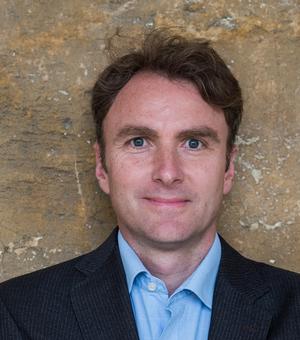
C.S. Lewis’s Oxford
Simon Horobin
Professor of English Language and Literature, University of Oxford
Friday, February 20 at 3:30 p.m.
Ruane Center for the Humanities 105
The fantastical fictional land of Narnia, famously reached via a magical wardrobe, has many connections to the world in which its creator C.S. Lewis lived. The influence of Oxford can be seen not only in medieval buildings and towers but also in the literature which Lewis encountered there, through a lifetime’s reading and teaching of classical, medieval and renaissance literature. This talk will examine the role Oxford, its colleges, libraries, chapels, clubs, common rooms and pubs, played in fostering the work of one of the twentieth century’s most influential writers and thinkers. It also takes a fresh look at his extensive involvement in Oxford’s various clubs and societies, including the Coalbiters, the Socratic Club and, of course, the Inklings, whose distinguished members coalesced around him and his great friend, J.R.R. Tolkien.
Read more about this event.
Dr Simon Horobin is Professor of English Language and Literature and Fellow and Tutor in English at Magdalen College, University of Oxford. He has published widely on medieval literature and the English language. He has lectured to a variety of audiences on C.S. Lewis, has published articles on Lewis’s scholarly writings and is the author of C.S. Lewis’s Oxford (Bodleian Publishing 2024).
February 27, 2026
In collaboration with the School of Nursing and Health Sciences
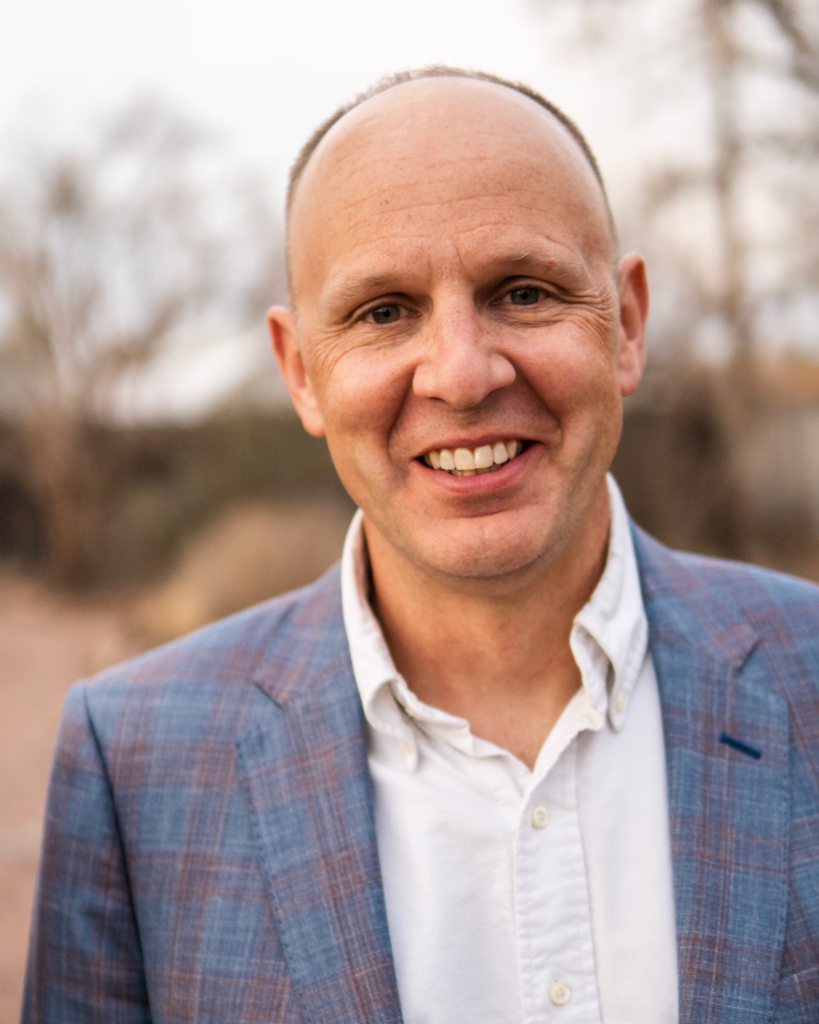
Where The Pale Rider Takes Us: Solidarity and Subsidiarity in Post-Pandemic Healthcare
Abraham Nussbaum, MD, MTS
Chief Education Officer, Denver Health and Professor of Psychiatry at University of Colorado
Friday, February 27 at 3:30 p.m.
Ruane Center for the Humanities 105
In the last century, three of the seven deadliest plagues in human history have catalyzed change in the ways societies conceive of medicine, research, and the university. Drawing upon the historical record and contemporary data, we will explore how H1N1 and HIV galvanized community involvement in research and rooted medical training in research universities. Today, the ongoing changes catalyzed by COVID-19 are transforming research universities and creating opportunities to advance solidarity by engaging Catholic Social Teaching.
Read more about this event.
Abraham Nussbaum is a physician at Denver Health, a major safety-net hospital, where he cares for patients hospitalized with acute mental health crises and serves as Chief Education Officer, overseeing the training of 1,800 students and 1,200 residents each year. He is also a Professor of Psychiatry and Assistant Dean of Graduate Medical Education at the University of Colorado School of Medicine, where he teaches the basic sciences underlying psychiatry to first-year medical students.
Nussbaum studied medicine, psychiatry, social medicine, and theology at the University of North Carolina and Duke University. His writing has appeared in America, Commonweal, Psychiatric News, Plough, STAT, The Wall Street Journal, The Washington Post, and Times Higher Education.
March 19, 2026
In collaboration with the Dialogue, Inclusion, and Democracy (DID) Lab
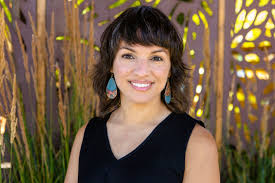
How to Have Fearlessly
Curious Conversations in
Dangerously Divided Times
Mónica Guzmán
Founder and CEO of Reclaim Curiosity
Thursday, March 19 at 4:30 p.m.
Moore Hall 125
Mónica Guzmán, the chief storyteller for the national cross-partisan depolarization organization Braver Angels, will address the real front lines of a crisis that threatens to grind America to a halt—broken conversations among confounded people. Drawing from cross-partisan conversations she’s had, organized, or witnessed everywhere from the echo chambers on social media to the wheat fields in Oregon to raw, unfiltered fights with her own family on election night, Guzmán shows how you can put your natural sense of wonder to work for you immediately, finding the answers you need by talking with people—rather than about them—and asking the questions you want, curiously.
Read more about this event.
Mónica Guzmán is a bridge builder, journalist, and author who lives for great conversations sparked by curious questions. Her best-selling book, “I Never Thought of it That Way: How to Have Fearlessly Curious Conversations in Dangerously Divided Times,” has been featured in The New York Times, The Glenn Beck Podcast, and Reader’s Digest, and was named one of the 10 best books to read before college by U.S. News.
Mónica is founder and CEO of Reclaim Curiosity, where she works to build a world that sees itself, and advisor for Braver Angels, the nation’s largest cross-partisan grassroots organization working to depolarize America. She serves on the Board of Directors for the Viewpoints Project, a nonprofit dedicated to improving capacity for curious approaches to disagreement in educational settings, and is host of “A Braver Way”, a podcast that in the run-up to the 2025 election equipped people with the tools they need to bridge the political divide in their everyday lives.
Mónica received an honorary doctorate degree from Wheaton College and completed study and research fellowships at the Nieman Foundation for Journalism at Harvard, where she researched how journalists can rethink their roles to better meet the needs of a participatory public, the Henry M. Jackson Foundation, where she studied social and political division, and the University of Florida, where she joined forces with researchers testing techniques to boost understanding across differences.
A Mexican immigrant, Latina, and dual US/Mexico citizen, she lives in Seattle with her husband and two kids, plays a barbarian named Shadrack in her besties’ Dungeons & Dragons campaign, and is the proud liberal daughter of conservative parents.
March 27, 2026
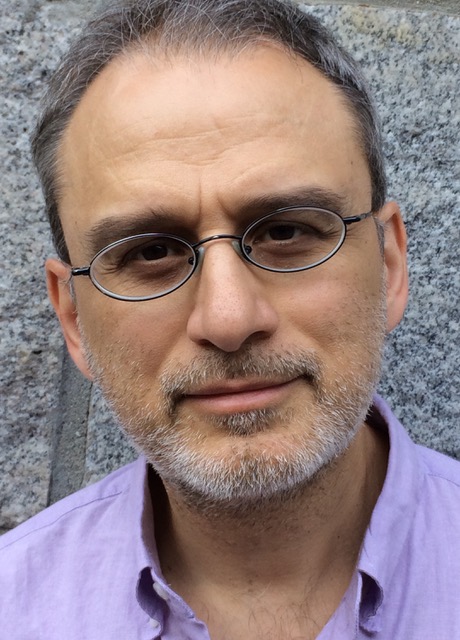
The End of Solitude
a conversation with William Deresiewicz
Author and essayist
Friday, March 27 at 3:30 p.m.
Ruane Center for the Humanities 105
What is the internet doing to us? What is college for? What are the myths and metaphors we live by? These are the questions that William Deresiewicz has been pursuing over the course of his award-winning career. Taking up themes from his most recent essay collection, The End of Solitude, this conversation will consider what it means to be an individual, and how we can sustain our individuality in an age of networks and groups.
Read more about this event.
William Deresiewicz is an award-winning essayist and critic, a frequent speaker at colleges, high schools, and other venues, and the author of five books, including the New York Times bestseller Excellent Sheep and, most recently, The End of Solitude: Selected Essays on Culture and Society. His current project is a historically situated memoir about being Jewish in modernity.
Bill has published over 300 essays and reviews. His work, which has appeared in The New York Times, The Atlantic, Harper’s, The London Review of Books, and many other publications, has been translated into 19 languages and included in over 40 college readers and other anthologies. He taught English at Yale before becoming a full-time writer. He has held visiting positions at Bard, Scripps, and Claremont McKenna Colleges as well as at American Jewish University and the University of San Diego.
Bill is a member of the board (directorial or advisory) of The Matthew Strother Center for the Examined Life, a retreat and study program in Catskill, NY; Tivnu: Building Justice, which runs a Jewish service-learning gap year and other programs in Portland, OR; and the Prohuman Foundation, which promotes the ideals of individual uniqueness and shared humanity.
April 10, 2026
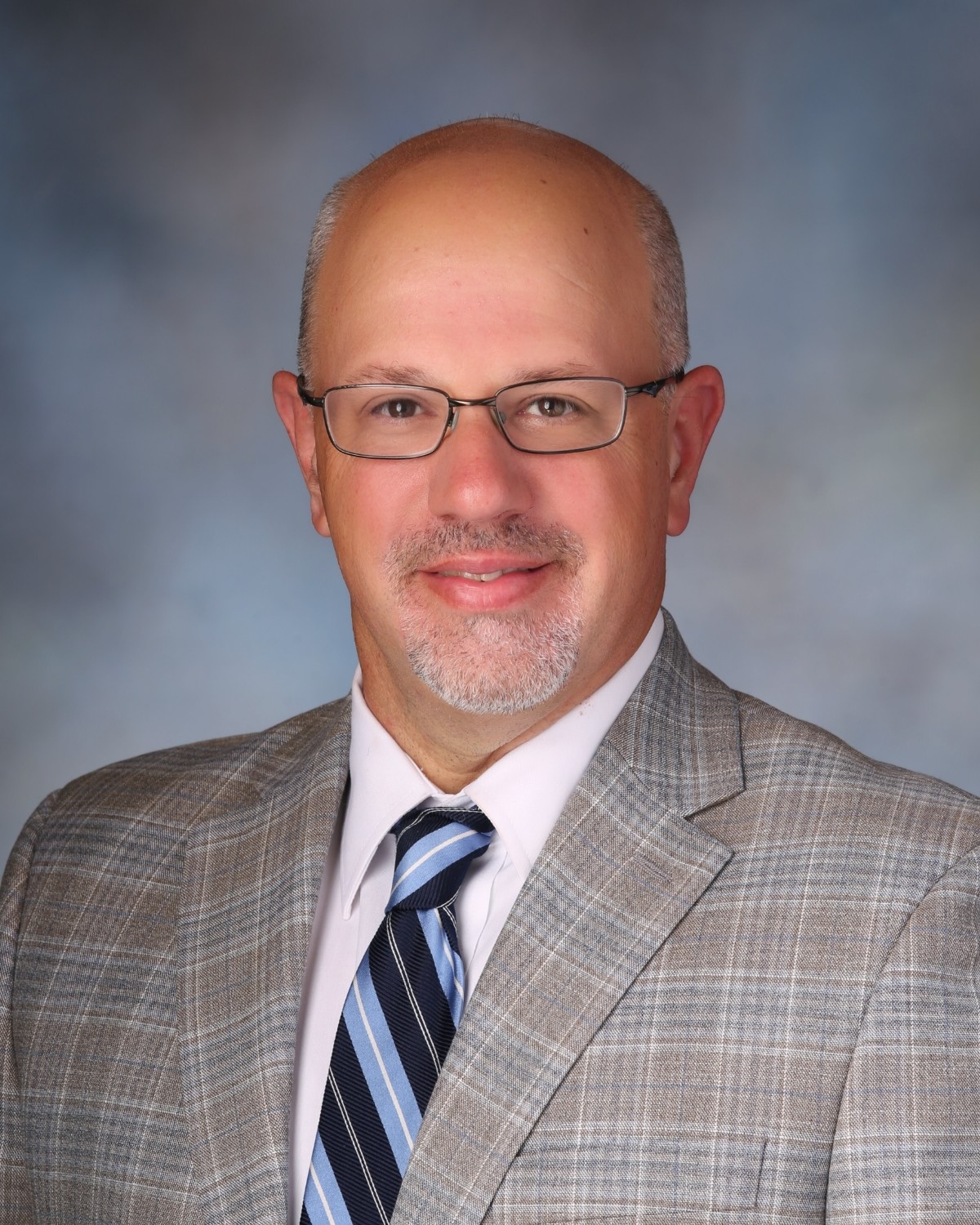
Being an Image of God in the Age of AI
a conversation with David Delio
Teacher and entrepreneur
Friday, April 10 at 3:30 p.m.
Ruane Center for the Humanities 105
AI can write your résumé, predict your next purchase, and diagnose your symptoms. But it can’t touch the one question that drives every decision you make: Who did God make me to be? Dr. David Delio has spent 25 years studying classical and modern temperament theory and drawing from Sts. Augustine, Aquinas, Newman, and St. John Paul II. The result is IKON — an approach built on questions designed to uncover the foundations of who you are as an image of God, the deep architecture of your soul and body. In this conversation, Dr. Delio will discuss how and why he developed IKON and the IKON Examen, why the age of AI is actually starving for wisdom about the human person, and make the case that real self-knowledge is the one thing no algorithm can give you.
Read more about this event.
Dr. David Peter Delio is Chair of the Theology Department at Jesuit High School New Orleans and founder of IKON Cor Education LLC. He holds a Ph.D. in Systematic and Historical Theology from The Catholic University of America, where his research focused on John Henry Newman and the philosophy of education. A published Newman scholar with over 25 years of teaching experience — including appointments at Georgetown University, CUA, and the University of Holy Cross — Dr. Delio has spent decades studying classical and modern anthropologies. That work led to IKON, an approach of questions designed to uncover the foundations of who you are as an image of God, and the IKON Examen, its first instrument — now live at ikonexamen.com. He is a New England transplant to New Orleans, where he co-founded Image and Likeness with his Cajun wife Becki, a Louisiana nonprofit advancing healing, formation, and wisdom programs.
April 17, 2026
Made possible by the Lynde and Harry Bradley Foundation
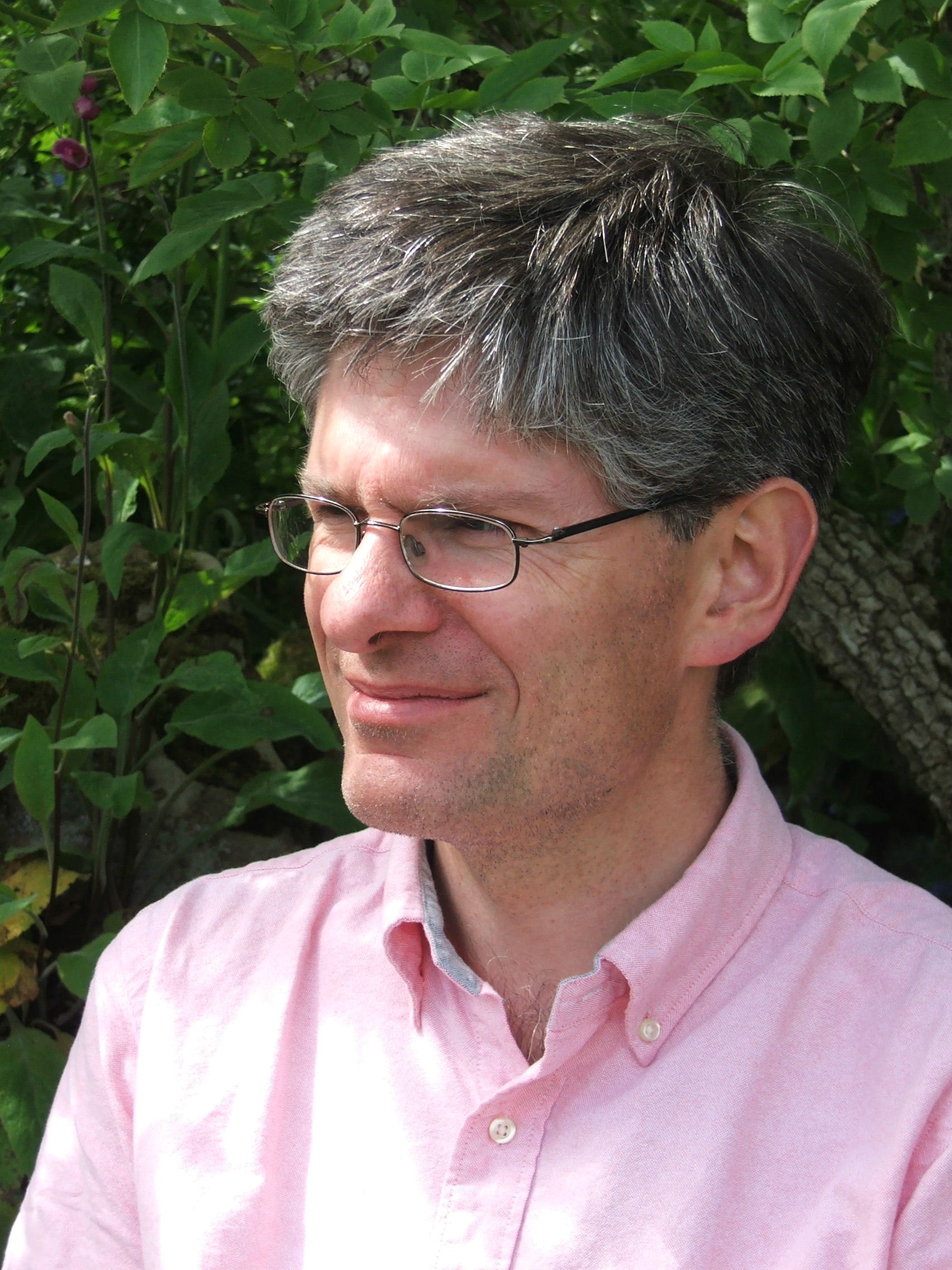
The Age of Hitler and How We Will Survive It
Alec Ryrie
Professor of Theology and Religion, Durham University
Friday, April 17 at 3:30 p.m.
Ruane Center for the Humanities 105
We live in an age where Hitler and the Nazis dominate our cultural imagination, shaping values once defined by religion. Historian Alec Ryrie explores why society remains captivated by this struggle, from history and fiction to modern myths such as Star Wars and Harry Potter. He examines the costs of our Nazi obsession and questions what will come as our anti-Nazi moral consensus frays and both the Left and Right begin to move on. With a fresh take on modern history and pop culture, The Age of Hitler and How We Will Survive It offers a thought-provoking look at the culture wars and our shifting political crises, challenging assumptions on both sides and asking what a new moral vision might look like.
Read more about this event
Alec Ryrie is a historian of Protestant Christianity in general and of religion in early modern England and Scotland in particular. He is interested in the cultural, social, political and emotional history of religion, and has written on subjects including faith and doubt; martyrdom, violence and religious warfare; magic and deception; moderation and radicalism; childhood religious experience; and liturgy and prayer, formal and informal. He is co-editor of the Journal of Ecclesiastical History and (in 2019-20) president of the Ecclesiastical History Society. His books include Unbelievers: An Emotional History of Doubt (2019, The English Reformation: A Very Brief History (2020), and most recently The Age of Hitler and How We Will Survive It (2025). In 2029 he was elected a Fellow of the British Academy. He is also a licensed Reader in the Church of England.
April 24, 2026
Made possible by a grant from the National Endowment for the Humanities
This Vast Enterprise: A New History of Lewis & Clark
Craig Fehrman
Journalist and historian
Friday, April 24 at 3:30 p.m.
Ruane Center for the Humanities 105
When Meriwether Lewis and William Clark returned from their long journey, in 1806, they brought an incredible tale starring themselves as courageous explorers, skilled scientists, and peaceful ambassadors. There was truth in those descriptions. But there was also distortion.
For the first time in a generation, This Vast Enterprise offers a fresh and more accurate account of their expedition—a gripping narrative that draws on new documents, stunning analysis, and Native perspectives to reveal the vast scope of the expedition and the heroic sacrifices of a few human beings.
Read more about this event.
Craig Fehrman has taught at Yale University and Indiana University, Bloomington. He is the editor of The Best Presidential Writing, and his journalism has appeared in The New York Times and The Washington Post, among others. Fehrman is the author of Author in Chief: The Untold Story of Our Presidents and the Books They Wrote, which the Wall Street Journal called “one of the best books on the American presidency to appear in recent years.” He now lives in Bloomington, Indiana, with his wife, who works in publishing, and their two children. He also teaches sportswriting at Indiana University.
May 1, 2026
John F. Fay ’68 Lecture

Human Dignity in the Algorithmic Society
Paolo Carozza
Professor of Law and Political Science at the University of Notre Dame; Co-chair of Meta’s Oversight Board
Friday, May 1 at 3:30 p.m.
Ruane Center for the Humanities 105
This talk and conversation will consider the ways in which artificial intelligence and algorithmic technologies generally pose new challenges to our understanding of the dignity of the human person, and what is necessary to honor and preserve that dignity today. While the concept of “dignity” has loomed large in our law, politics, and ethics over the last century, conventional cultural understandings of human dignity today are too thin to withstand the enormous pressures of the algorithmic society. In the face of today’s technological revolutions we need to recover and develop a more robust and integrated understanding of the human person and of what makes human persons distinctly valuable.
Read more about this event.
Paolo Carozza is Co‑Chair of the Oversight Board, the independent expert body created by Meta, the parent company of Facebook and Instagram, to issue binding decisions and policy recommendations on difficult content‑moderation questions. He previously served as the United States member of the Council of Europe’s Venice Commission and as a member of the U.S. State Department’s Commission on Unalienable Rights. From 2006 to 2010 he was a member, and in 2008–09 President, of the Inter‑American Commission on Human Rights. In 2016 Pope Francis appointed him an Academician of the Pontifical Academy of Social Sciences.
A member of the Notre Dame Law School faculty since 1996, Carozza is an expert in comparative constitutional law, human rights, law and development, and international law. He has directed the Kellogg Institute for International Studies and the Law School’s Center for Civil and Human Rights. He is a Faculty Fellow of several Notre Dame institutes and clinics, including the Klau Institute for Civil and Human Rights and the Notre Dame Global Human Rights Clinic. Carozza holds an AB from Harvard University and a JD from Harvard Law School, where he was also a Ford Foundation Fellow. After law school he clerked for the Supreme Court of the Federated States of Micronesia and practiced at Arnold & Porter in Washington, D.C..